™
- RADIATA REIMaginED - ™
Carbon Sequestering


Turning Forest Residues into Long-Term Carbon Storage
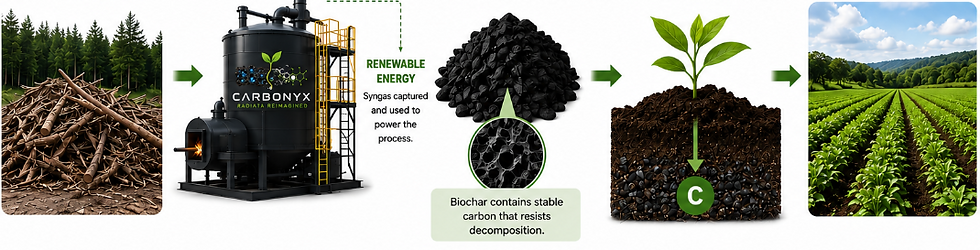
Forests naturally absorb carbon dioxide (CO₂) from the atmosphere as trees grow. When wood residues such as branches, offcuts, and forestry waste are left to decompose or are burned in open piles, much of that carbon is released back into the atmosphere.
A biochar reactor provides a different solution.
Using a controlled thermal process called pyrolysis, forest residues are heated in a low-oxygen environment and converted into biochar—a stable, carbon-rich material. Instead of returning to the atmosphere, a significant portion of the carbon contained within the wood becomes locked into the biochar structure.
When biochar is incorporated into soil, that carbon can remain stored for hundreds to thousands of years, making it a powerful tool for long-term carbon sequestration.